Science
Our intent:
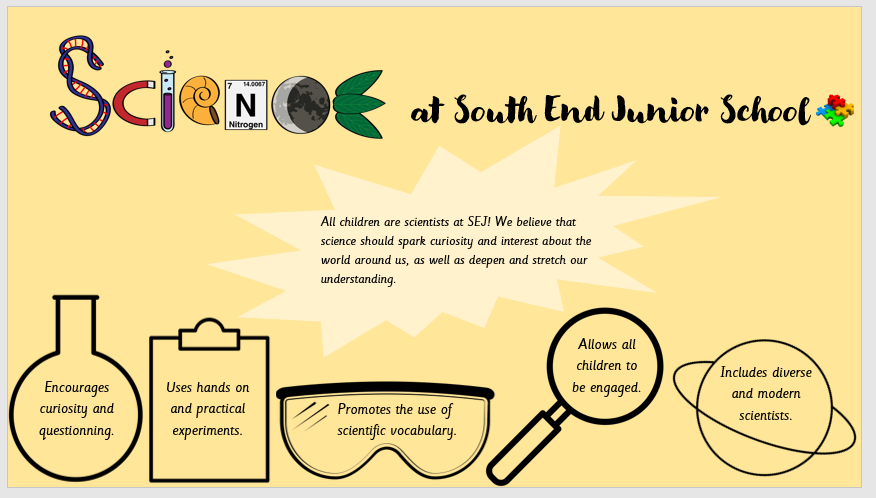
At SEJ, we believe that science is a doorway through which children are provided with opportunities that help them gain a greater understanding of the world around them. Through making links and connections to real life experiences, they learn about how and why things work. They will learn about pioneering scientists who paved the way, smashing the stereotypes of race and gender as we celebrate the successes of innovative scientists from the past and present. Exploring through their own investigations, they will engage in experiments, be encouraged to question and challenge mindsets, and develop an interest in the awe and wonder that is found in our day-to-day lives, the wider community and stretching further into outer space.
To view our current long-term overview for science, please click here.
Our way:
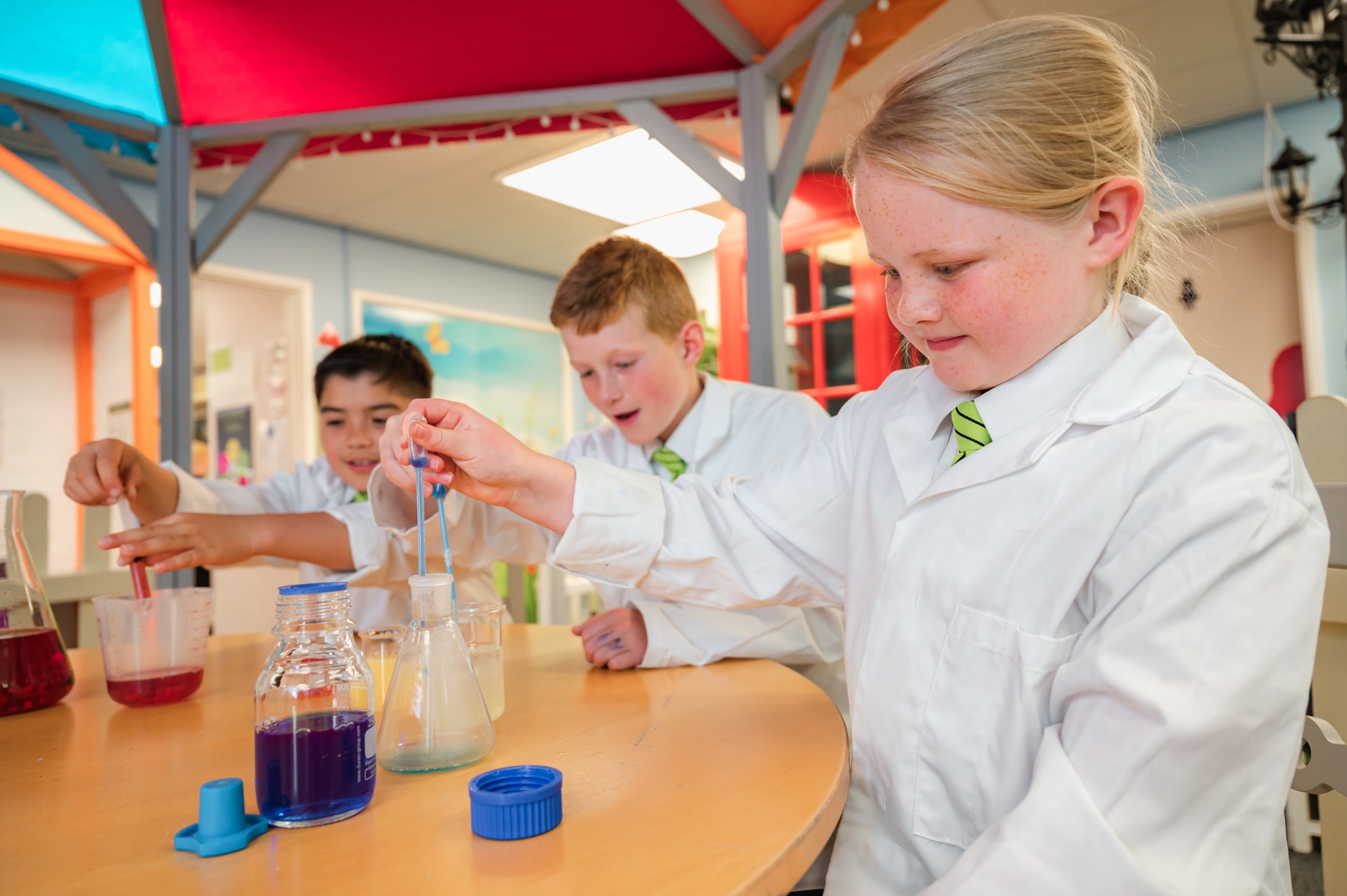
Following the National Curriculum objectives, lessons are adapted and designed for the children at SEJ to suit their needs. Awe and wonder are created through our project WOW days, capturing the children’s interests from the outset, such as earthquake day in Year 3 or dissecting a lamb’s heart in Year 6.
At SEJ, each science project begins with a ‘BIG Question’, which hooks the children in and engages them in the learning that is to follow. The proceeding series of lessons are tailored to enable the children to answer the ‘BIG Question’, which forms part of their assessment opportunity at the end of the project. Our inclusive curriculum ensures that all children get to experience science lessons that are varied, incorporating enquiry, investigation and experimentation with the aim of building a curious and questioning mind in children about the world around them.
Long-term overviews have been created to include target memories (knowledge the children should know by the end of each lesson) and carefully selected vocabulary which complements the target memories, ensuring there is progression from Year 3 to Year 6. Throughout the series of lessons, the vocabulary is embedded through talk and activities, often introduced through an oracy approach. It is an integral part of lessons, ensuring that the science curriculum is vocabulary-rich; the children are encouraged to use subject-specific vocabulary in their discussions and written work.
Throughout our curriculum, the children are introduced to significant scientists from both the past and present who have paved the way for making new discoveries and contributing to the world around us. Science feeds into the application of reading and writing skills when researching different scientists. Furthermore, science pioneers are celebrated during British Science Week, assemblies and through Black History Matters.
Every classroom has a science working wall which includes flipchart paper. Here, the teacher is able to model written explanations, share diagrams and write definitions of subject-specific vocabulary. The flipchart paper is a visual aid to support pupils and is used as a teaching tool which can be referred to within lessons, and in subsequent lessons, to facilitate knowledge retrieval which will support the children in answering the Big Question.
Each project is organised in the same manner within the children’s books. It begins with a knowledge organiser which provides the target memories to be taught, keywords and visual prompts, a Brain Dump double-page spread, a series of lessons and culminates with a quiz and children answering the ‘BIG Question’.
The Brain Dump is a double-page spread where the children can recall and reflect on their previous learning. Here, they may write definitions, draw diagrams or complete short tasks to assist in consolidating their understanding. Further recall and retrieval practice of the science skills studied are conducted during early morning challenges.
By the end of the project, having investigated and explored through experimentation, the children will have a vast knowledge and understanding of the content to be able to complete an end-of-project quiz and answer the ‘BIG Question’. The quiz consists of a series of questions about the project requiring the children to apply what they have learnt throughout the project. To support the children in answering the ‘BIG Question,’ they can refer back to their Brain Dump and the work from their previous lessons. Children will demonstrate their understanding through written explanations, diagrams, physical creations or presentations. These written responses and answers to the Big Question, combined with evidence from weekly lessons, help to inform the summative judgements made by teachers at the end of each term.
In addition to short-term retrieval practice, further opportunities are interwoven within the curriculum to help the children to retain the knowledge that they have learnt. SEJ provides ‘Innovation Fridays’ which enable the children to consolidate and further embed their learning through revisiting projects after a minimum six-week period. This is an opportunity for children across the whole school to reflect upon and revisit prior learning; to celebrate their retained understanding through challenges designed and planned for the children to display their knowledge and skills. During these sessions, children construct, perform or present what they have learnt and can recall from previous projects, such as putting their knowledge of electricity to the test to create a board game or recreating the rock cycle out of sweets.