PE
Our intent:
At South End Junior School, we believe that Physical Education plays a vital role in promoting a healthy lifestyle and should be both purposeful and enjoyable. Active children are healthier in both body and mind. Therefore, we aim for all pupils to engage in at least 60 minutes of physical activity each day to support their social, emotional and mental wellbeing. Through a broad and balanced Physical Education curriculum, delivered both in school and within the local community, pupils develop fundamental skills and appropriate vocabulary alongside participation in a wide range of competitive sports.
Pupils are taught to take part in both individual and team sports to deepen their understanding of tolerance, co-operation and how to motivate others. We actively encourage pupils to engage in physical activity beyond the school environment by joining local teams, helping to widen participation while further developing communication and social skills. All pupils are given opportunities to represent the school during their time with us, learning how to support and respect one another while celebrating success regardless of individual barriers. Pupils are taught to win and lose graciously, fostering resilience, self-motivation and a growth mindset that prepares them for future challenges.
Essential life skills are also taught, including swimming a minimum of 25 metres and developing an understanding of water safety to support pupils in leading safe and healthy lives beyond primary education.
Please click here to view our PE long term overview.
Our way:
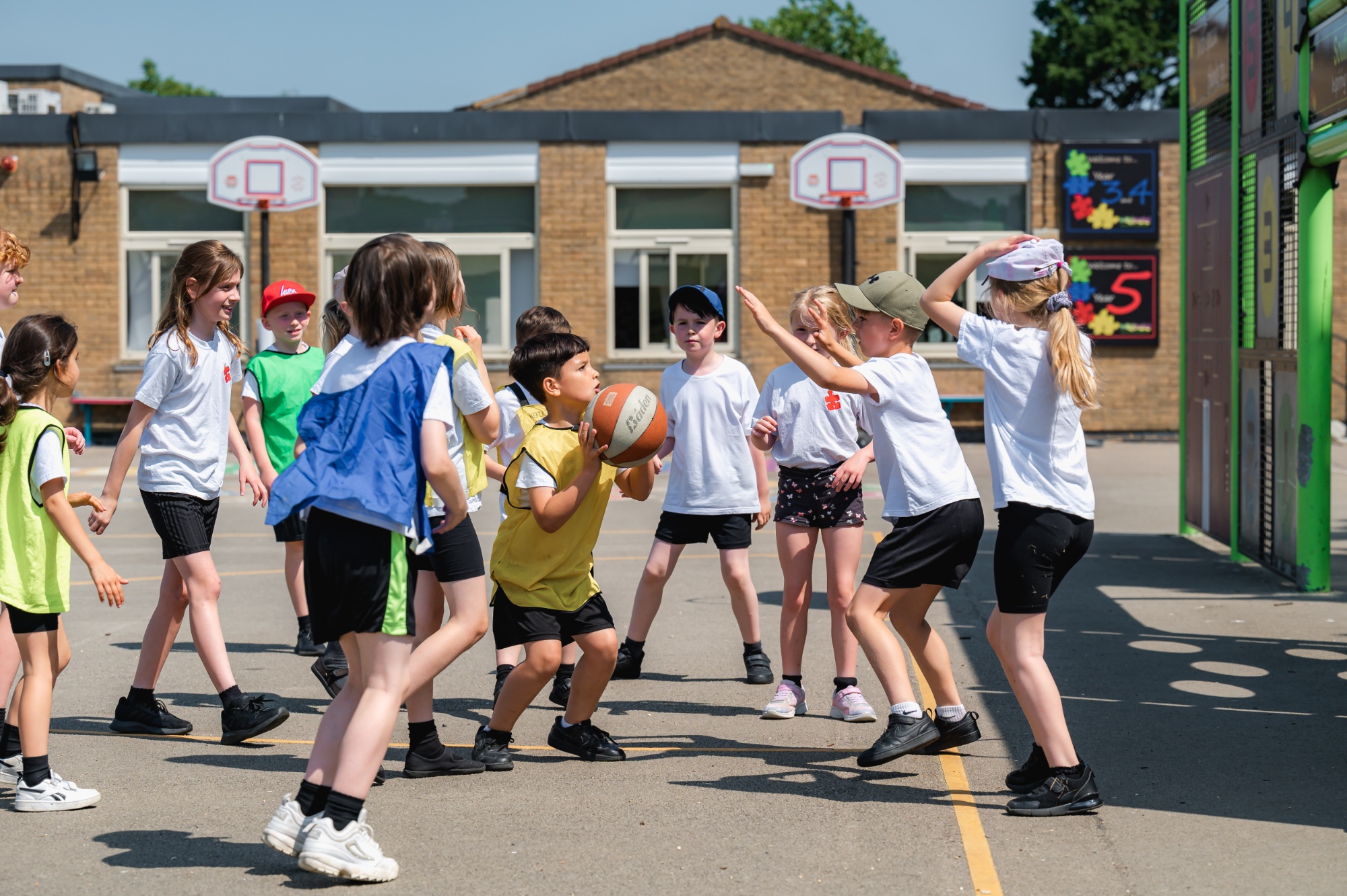
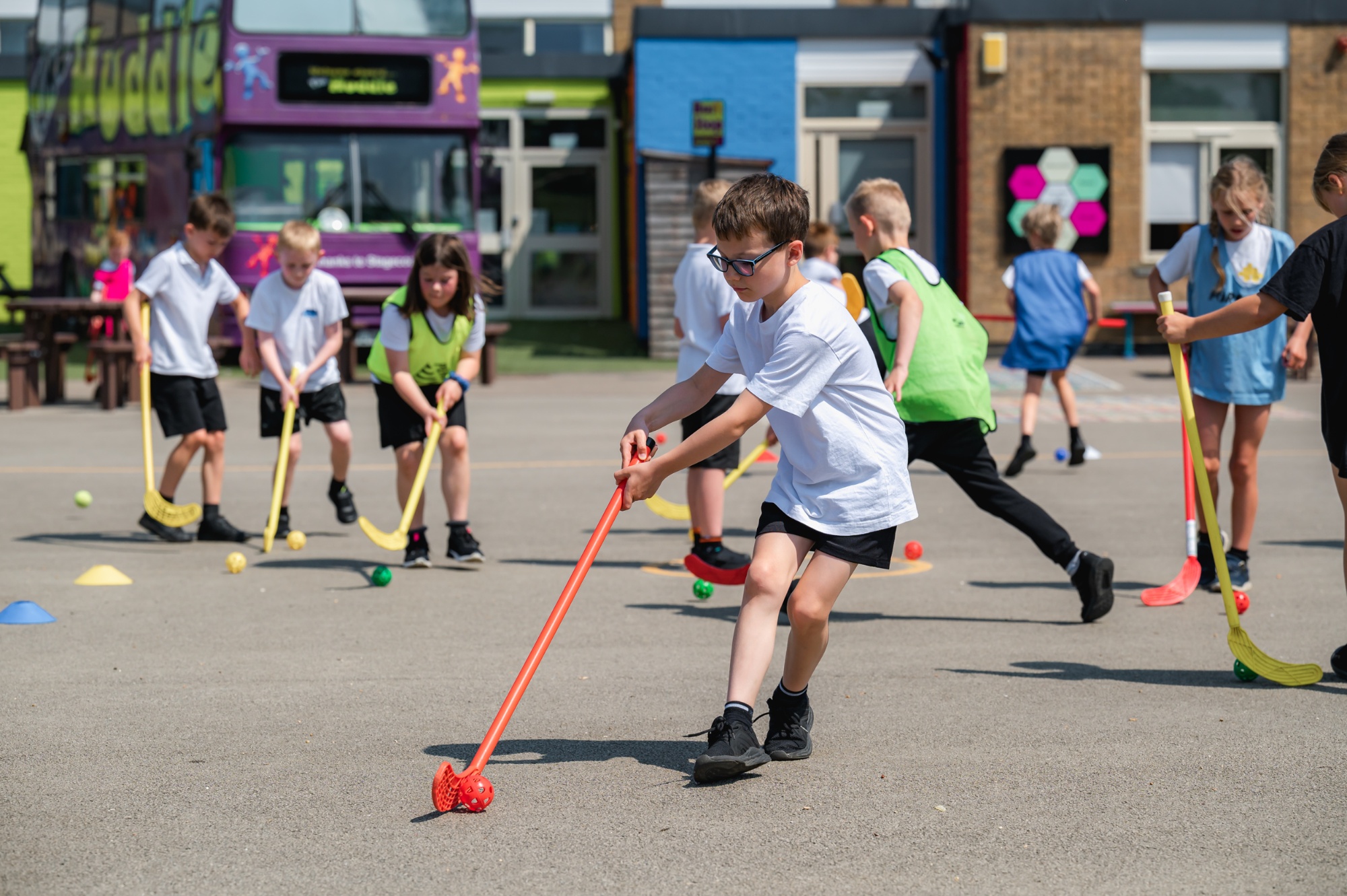
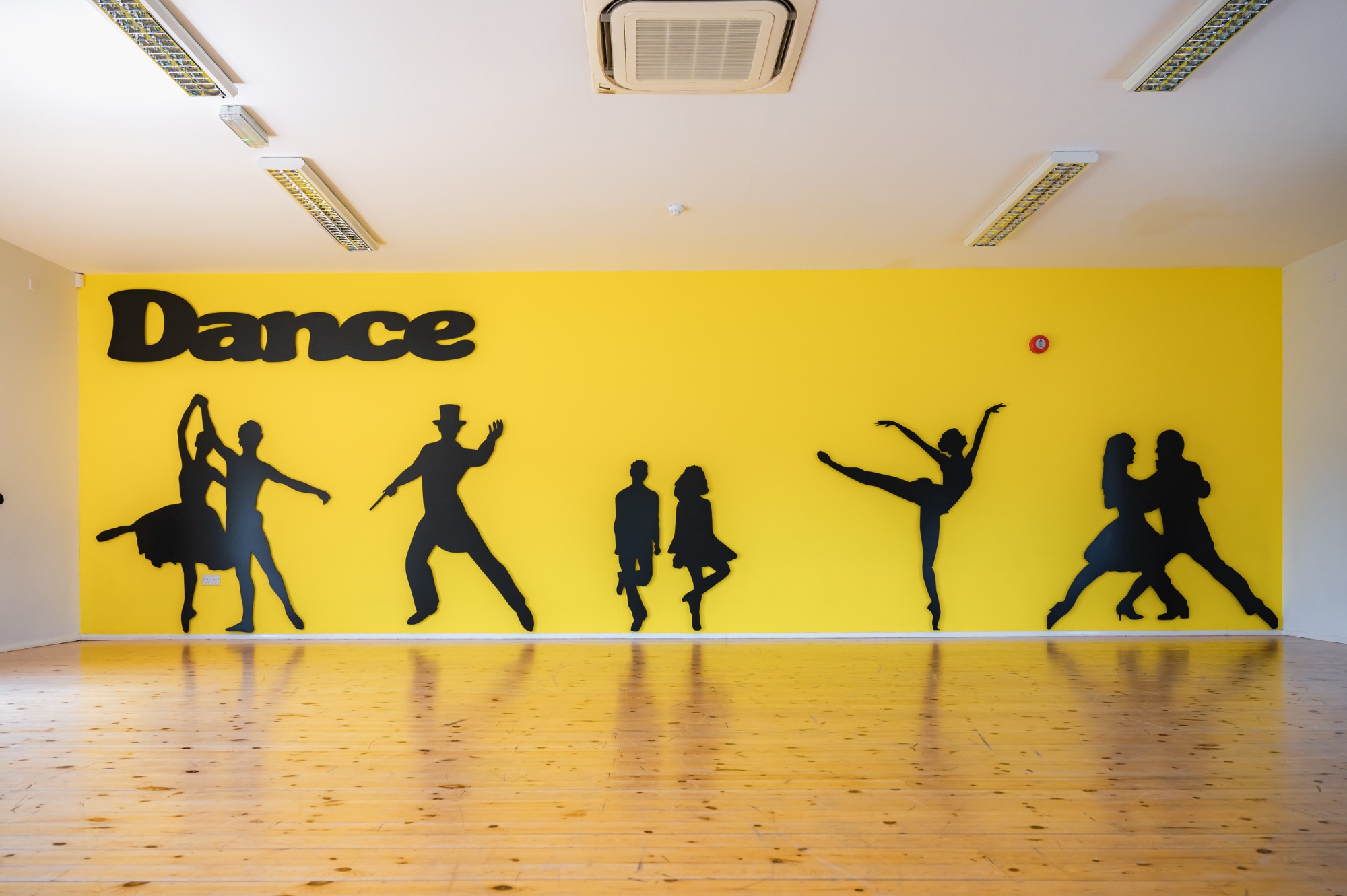
We teach two PE lessons each week. In one lesson, the pupils are taught how to develop flexibility, strength, technique, control and balance through dance, gymnastics and Real PE. In their other lesson, pupils learn how to play competitive games, which have been modified where appropriate. The core skills of running, jumping, throwing and catching (in isolation and in combination) are taught at the start of units to help support the competitive games-based approach. Children are given the opportunity to reflect on their own performance during their lessons and engage in peer assessment also. We encourage pupils to challenge themselves, but also provide support so that all children can succeed and develop a life-long love of sport.
Swimming, as in the National Curriculum, sits by itself. Each year group swims for a period of 6 weeks. The children are split into small groups and given tailored instructions by qualified swimming coaches. By the end of KS2, children need to be able to swim competently, confidently and proficiently over a distance of at least 25 metres. We strive to succeed in this and ensure additional swimming lessons are provided for year 6 pupils if they have not met the expectation by the end of their 6-week block.
Our PE units are planned to correlate with cluster and school sports competitions. This allows for the children to learn a variety of sports while also being prepared to compete and represent the school. In addition to PE lessons, a richer offering is available through after-school sports clubs led by teachers over the course of the year. These are fully inclusive clubs, allowing any children to participate who wish to.
We expect children to complete the Daily Mile which equates to 3 laps of the purpose-built track. Children are given the opportunity to run the Daily Mile at lunchtime with the assistance of Young Sports Leaders (Y5/6 pupils). The Chief Medical Officers’ guidance on daily physical activity levels sets out that children should do at least 60 minutes of physical activity a day. PE lessons, Daily Mile, lunchtime clubs and after-school sports clubs all help the pupils to achieve this. Our after-school clubs are run by Freestyle (an external provider), allowing for our pupils to participate in non-curriculum sports (football, dodgeball and dance). In addition, our teacher ran clubs always include sporting activities such as cricket, American football, yoga and much more to increase the participation in not so well-known sports.
Sports Premium funding is used by primary schools to provide additional and sustainable improvements to the quality of PE, sport and physical activity.