Geography
Our intent:
At SEJ, we believe that through learning about physical and human geography, such as different land formations, ever-changing landscapes and the evolving world around us, our children will gain a better understanding of the different locations and diverse cultures found in our local, national and global communities.
We are able to identify different physical and human features of an area, make informed judgements about how to support and prevent natural disasters; and equip children with the necessary vocabulary and terminology to enable them to have an intriguing mind to question, observe and evaluate the world around them, which is achieved through classroom learning and hands on experience.
Please click here to view our long-term overview.
Our way:
At SEJ, our geography lessons are interwoven using the National Curriculum objectives, which are linked to our 'Target' and 'Bonus' memories. Target memories are key knowledge that we want all children to learn in a project. Bonus memories are linked to greater depth understanding. Our lessons incorporate the skills associated with human and physical geography, including map-reading skills; recall of facts; making comparisons; and identifying physical and human features.
Each geography-driven project begins and ends with a ‘BIG Question’ to enthuse and engage the children in the learning that is to follow. The following series of lessons are tailored to enable the children to answer the ‘BIG Question’, which forms part of their assessment opportunity at the end of the project.
Throughout the series of lessons, key 'Target' vocabulary is embedded through teaching inputs, discussions and planned activities. Long-Term Overviews include specific target vocabulary that complements the target memory objectives for each project, ensuring that our geography curriculum is progressive, both in terms of knowledge and vocabulary, from Year 3 to Year 6.
Integration of target memories and target vocabulary are integral parts of our geography lessons to ensure that our geography curriculum is rich in core geographic understanding, both in terms of knowledge and vocabulary. During lessons, and as part of their assessment opportunity when answering ‘the BIG Question’, children are encouraged to use subject-specific vocabulary in their discussions and written work.
Every classroom has a project working wall, which highlights the project that is studied and is built upon progressively during a key topic of study. This may include key vocabulary and facts, visual aids and examples of children’s work. Each project is organised in a consistent manner in the children’s books. The start of a new project often begins with an A4 Knowledge Organiser, providing Target memories, which form the foundation of core knowledge learners will acquire during the project, as well as Target Vocabulary and visual prompts; a 'Brain Dump' page; a series of lessons; and it culminates in the children answering the ‘BIG Question’.
The Brain Dump is a double-page spread where the children are able to recall and reflect on their previous learning. Here, they may write definitions, draw diagrams or complete short tasks to assist in consolidating their understanding. Further recall and retrieval practice of these skills are completed during early morning tasks, as deemed necessary by individual year groups to promote retrieval and embedding knowledge into long-term memory.
Children draw upon their Brain Dump, as well as referring to the work from their lessons, to support them when answering the ‘BIG Question’ at the end of the project. Within this final piece, children are able to explain the how and why, through written responses and annotated diagrams, demonstrating their knowledge and understanding. The ‘Big Question’ and work produced during the project collectively provide the evidence for the teacher to make summative assessment judgements.
In addition to the geography-driven projects studied, we hold an annual Geography Study, which lasts two weeks and centres on sessions being predominantly focused on geography skills, including locating countries; using maps and ordnance surveys; and understanding geographical similarities and differences between human and physical geography. Links to Maths (for example, statistics work including reading charts, interpreting data or creating graphs), are also welcomed and planned for during our Geography Study.
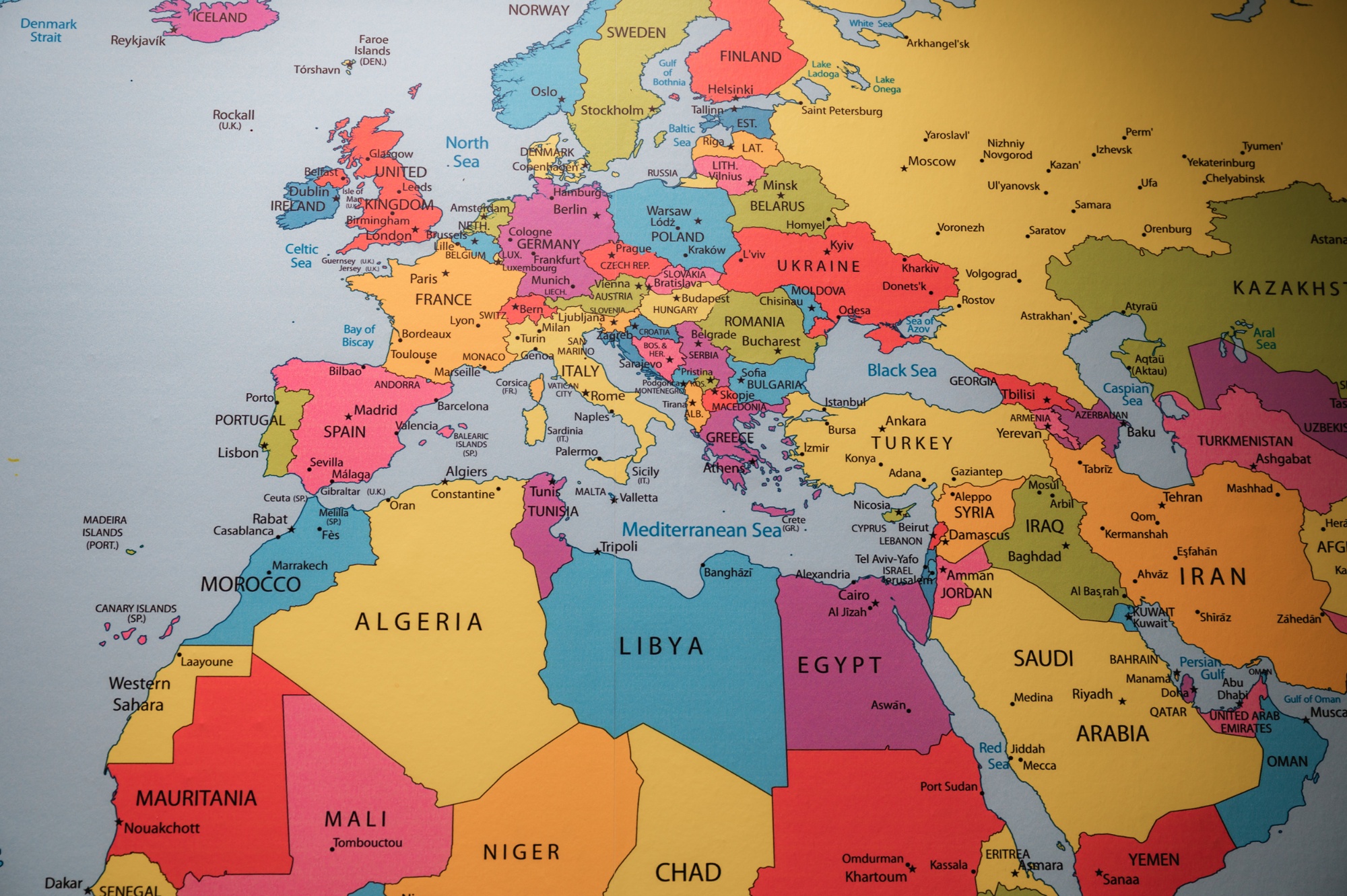
As the children journey through SEJ, they will learn more about the world around them. The learning journey begins in Year 3 with learning about their locality of Rushden and Northamptonshire. This then widens to the United Kingdom in Year 4, extending to Europe in Year 5 and finally experiencing the location, landscapes and cultures of the USA in Year 6.
In order to provide children with opportunities to retain the knowledge that they have learnt and consolidated, SEJ provides an ‘Innovation Friday.’
This is an opportunity for children across the whole school to reflect, revisit prior learning and celebrate their understanding through activities designed and planned for the children to display their skills and to promote retrieval of knowledge. During this time, children might construct, perform or present what they have learnt from the previous project, such as recreating the water cycle using people and movement.