English
Writing
Our intent:
It is our intention when teaching the English curriculum that our pupils acquire the necessary knowledge, skills and understanding to become life-long learners and leave our school ‘secondary ready’.
English is a core subject of the National Curriculum and a pre-requisite for educational and social progress as it underpins the work undertaken in all areas of the curriculum. The acquisition of language skills is of the upmost importance and therefore the teaching of all aspects of English is given a high priority at South End Junior. All children are taught in class regardless of ability with scaffolding to support and challenge to deepen understanding. We prioritise the teaching and learning of strong grammatical skills, understanding of vocabulary and spelling in readiness for tomorrow’s world and the children’s future in the workplace. Vocabulary is key – Literacy Tree allows us to focus on oracy. We expect children to approach their learning with a positive mindset, leading to enjoyment within the English curriculum. Every child will leave SEJ a writer regardless of their starting point.
Click here to view our long-term writing overview for Year 3.
Click here to view our long-term writing overview for Year 4.
Click here to view our long-term writing overview for Year 5.
Click here to view our long-term writing overview for Year 6.
Our way:
We predominantly teach writing using the Literacy Tree approach, and we have adapted this process to suit the needs of our children. We aim to supplement our writing offer by exploring different genres within our curriculum projects, as well as planning real-life reasons for the children to write. Where possible, these are linked to current affairs or our local area, enthusing the children with a purpose for writing and preparing them for the future.
Children are inspired to write through the use of high-quality texts (based on different countries and cultures where appropriate) and by us immersing them in vocabulary-rich learning environments. The etymology of words is explored with the children, and they are encouraged to create their own definitions for any newly acquired vocabulary.
As far as possible, grammar and punctuation techniques are taught through our Literacy Tree units to enable us to teach not only the basic skills, but also how to control their use by evaluating the impact for the reader. Where this is not suitable, isolated grammar and punctuation lessons are timetabled.
Spelling is taught systematically to ensure that children understand the link between phonics teaching and phonetically plausible spelling. As they move through Key Stage 2, common exception words are learnt, and these are spelt with increasing accuracy. We focus on teaching spelling patterns in each year group as outlined in the National Curriculum. Where possible, teachers use statutory words in their model texts and modelled writing, as well as identifying project linked key words with the children that could be used in their own writing.
Non-negotiables for each year group are tracked to ensure new curriculum expectations and the progression of skills are met. Children take ownership over the small step targets. With support, if necessary, children identify a focus for their writing from the non-negotiables. These are updated regularly to ensure gaps are addressed, and their writing meets age-related expectations.
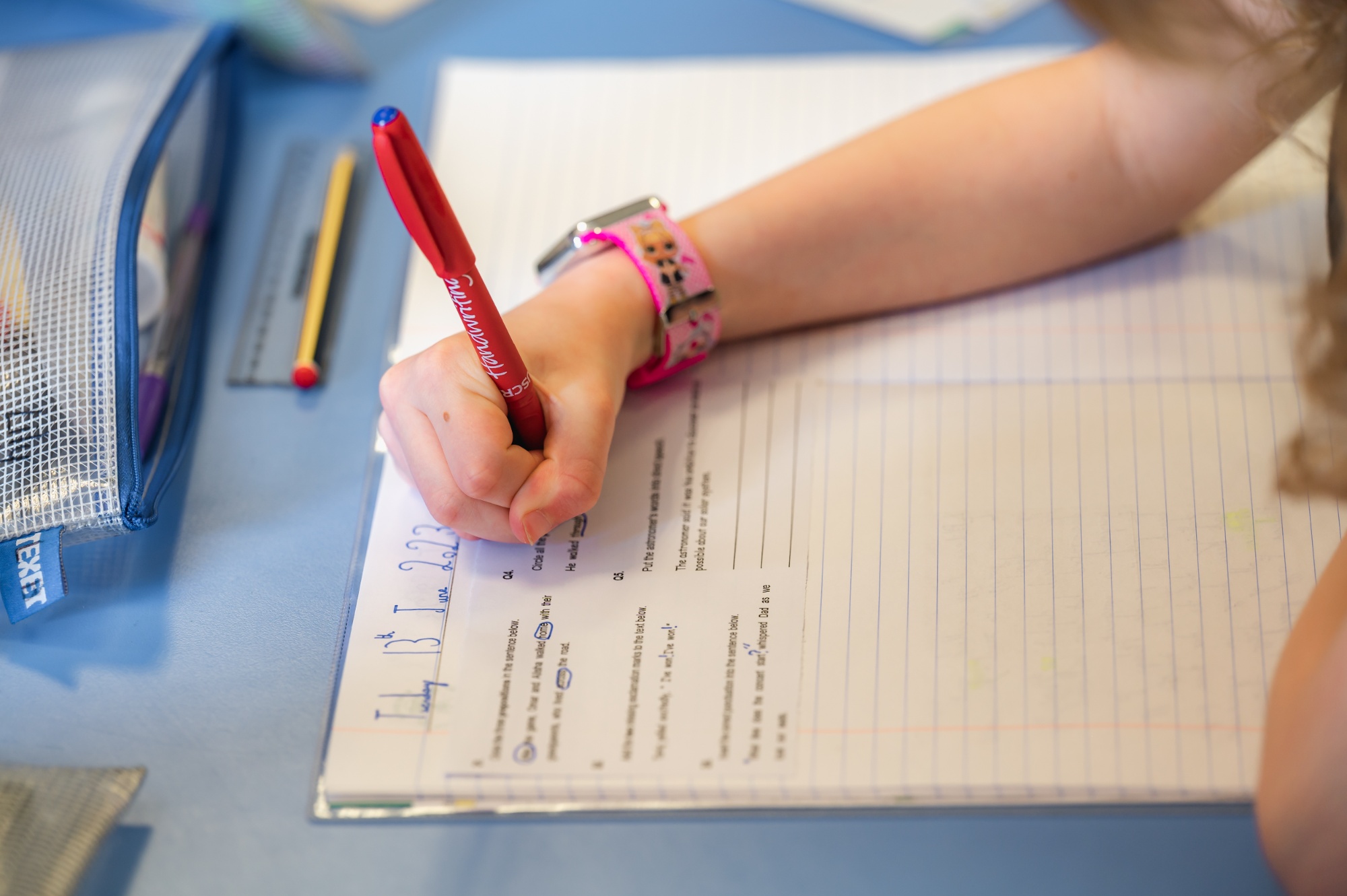
We believe that all pupils should be encouraged to take pride in the presentation of their writing, in part by developing a fluent, joined handwriting style. We use a joined font type as a model when appropriate.
Reading
Our intent:
Reading is everywhere: it is the stepping stone to our broad and balanced curriculum at SEJ, and it lays the foundations for success in the future. We will ensure every child will be a reader by Year 6, enabling them to access the full curriculum as well as reading for pleasure. It is our intention that by the time the children leave us, they will have been exposed to a large variety of texts and will have developed a love of reading. We ensure that the children are given the opportunity to read a range of high-quality fiction, non-fiction and poetry throughout their four-year learning journey at SEJ.
As a school, we are committed to instilling a love of reading and promote reading for pleasure across the school. We want the children to enjoy reading, and allow them to choose reading books that inspire and engage their imagination. As children’s earliest perceptions of the world and its cultures are shaped by their earliest experiences, including the books we read, it is essential that they see a true reflection of our society in the literature recommended and available to them. With this in mind, we have created an area in our Avenue that is dedicated solely to diversity. These books cover topics including religion, race, families, disability, illness, immigration, bullying and mental health. These carefully chosen titles help to promote and build an understanding of diversity, including empathy and tolerance of our different backgrounds, as well as entertaining and celebrating our rich, shared cultural heritage.
As teachers, we are reading role models and provide the children with opportunities to hear us read and share reading books with them, creating a collaborative love of reading.
Our way:
At South End Junior School, we encourage children to read in a variety of different ways: during project and English lessons, dedicated reading time in school, reading books online, shared reading, reading at home and reading skills lessons.
At SEJ, the Five Plagues of Reading support our chosen book lists. This ensures that the children are exposed to a progressive bookshelf which includes a variety of genres: archaic texts; stories which have a non-linear time sequence; stories which offer complexity of narrator and plot; and resistant texts. These text types have been proven to support children when understanding more complex texts, allowing the children to access them with confidence.
Shared reading allows the children to listen to their teacher read a story – this is the class read and often links to the current project in each year group. By listening to an adult read, the children can hear the pace and expression that is used to engage the reader. The staff are all very enthusiastic when sharing stories and enjoy reading high-quality texts to the children, exposing them to texts that they may not have chosen to read themselves.
Comprehension is a vital skill. It is important that the children not only enjoy reading, but also understand it. By teaching the different skills of reading, the children learn how to pick apart a text and understand what it means. Whilst reading, the children are immersed in new vocabulary, and this is explored in a variety of ways. The teaching of reading is based on developing key skills such as: inference, prediction, explanation, retrieval and summarising. Each year group uses a set of progressive non – negotiables to plan these sessions, ensuring coverage of the National Curriculum. Use of Literacy Tree reading units allows us to ensure that the children are exposed to increasingly challenging but appropriate texts which foster a love of reading.